
That Frustrating Moment When Your Garage Door Won't Stay Closed
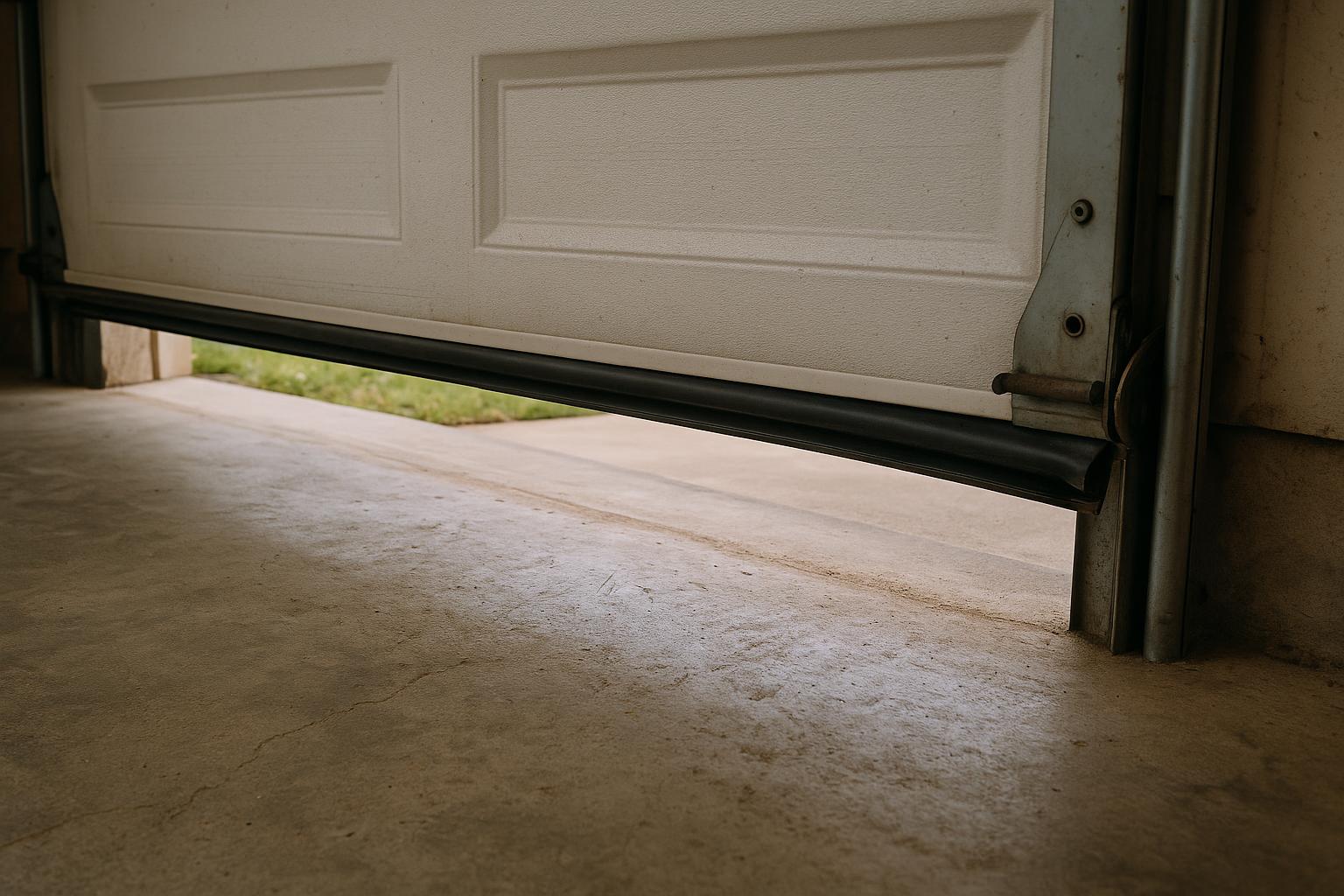
You press the button on your remote, watch your garage door begin its descent, and then — just before it reaches the floor — it stops and reverses back up. You try again. Same thing. Maybe it works on the third attempt, maybe it doesn't. Either way, you're standing in your Huntsville driveway wondering what's going on.
This is one of the most common garage door complaints we hear from homeowners across the area. The good news is that a reversing garage door usually points to a handful of identifiable causes, most of which are straightforward to resolve. The bad news is that ignoring the problem can lead to bigger issues down the road — or leave your home unsecured.
Let's walk through the most likely reasons your garage door reverses before hitting the floor and what you can do about each one.
1. Misaligned or Dirty Safety Sensors
This is the number one cause of a garage door that reverses unexpectedly. Every garage door opener manufactured after 1993 is required to have photo-eye safety sensors mounted near the bottom of the door tracks on each side. These sensors send an invisible beam across the opening. If anything breaks that beam — a pet, a child, a stray leaf — the door automatically reverses to prevent injury or damage.
The problem is that these sensors can become misaligned over time. A bump from a bicycle, a lawn mower vibration, or even settling of your garage floor can knock them out of alignment. When the two sensors can't "see" each other, the opener interprets this as an obstruction and reverses the door.
What to Check
- Alignment: Look at the small LED lights on each sensor. On most models, both lights should be steady (not blinking). If one is blinking, that sensor is likely out of alignment. Gently adjust it until the light becomes steady.
- Cleanliness: Dust, cobwebs, and dirt can accumulate on the sensor lenses, especially during Alabama's pollen-heavy spring months. Wipe them clean with a soft cloth.
- Wiring: Check that the wires running from the sensors to the opener unit haven't been damaged or disconnected.
2. Incorrect Close-Limit Settings
Your garage door opener has close-limit settings that tell the motor exactly how far the door should travel before it's considered fully closed. If these settings are off — telling the door to travel farther than it physically can — the opener thinks the door has hit an obstruction when it contacts the floor. Its built-in safety feature kicks in, and the door reverses.
This issue is especially common after a new opener installation or when homeowners attempt DIY adjustments. The close-limit switch is typically adjusted with a screw or dial on the opener unit itself. Small adjustments can make a big difference, so it's best to turn the dial in small increments and test after each adjustment.
3. Worn or Damaged Rollers and Tracks
Garage door rollers guide the door panels along the vertical and curved tracks. When rollers become worn, cracked, or caked with debris, they create resistance. If the opener encounters more resistance than expected during the closing cycle, it may interpret that friction as an obstruction and reverse.
Similarly, bent or misaligned tracks can cause the door to bind at certain points. In Huntsville, temperature swings between our hot summers and cooler winters can cause metal tracks to expand and contract slightly, sometimes leading to alignment issues over time.
Signs of Roller or Track Problems
- Grinding, scraping, or squealing noises during operation
- The door appears to hesitate or jerk at specific points
- Visible wear, cracks, or flat spots on nylon or steel rollers
- Gaps between the rollers and the track
Replacing worn rollers is a relatively affordable repair that can dramatically improve your door's performance and lifespan.
4. Problems with the Garage Door Springs
Your garage door springs do the heavy lifting — literally. They counterbalance the weight of the door so the opener motor doesn't have to do all the work. When a spring is weakening, broken, or improperly tensioned, the door becomes heavier than the opener expects. The motor strains, detects excessive force, and reverses the door as a safety precaution.
Important safety note: Garage door springs are under extreme tension and can cause serious injury if handled improperly. If you suspect a spring issue, we strongly recommend calling a professional rather than attempting a DIY repair. Our team handles spring replacements throughout Huntsville, Madison, and the surrounding communities on a daily basis, and we carry the parts needed to complete most repairs in a single visit.
5. An Aging or Malfunctioning Opener
Garage door openers typically last 10 to 15 years. As they age, the logic boards, gears, and internal components can start to malfunction. An older opener may begin reversing intermittently for no apparent external reason — the sensors are fine, the tracks are clear, and the springs are in good shape, but the opener's internal circuitry is simply failing.
If your opener is more than a decade old and you've ruled out the other causes on this list, it may be time to consider a replacement. Modern openers are quieter, more energy-efficient, and come with features like smartphone connectivity, battery backup, and enhanced security protocols.
6. Weather Stripping or Threshold Obstructions
Sometimes the answer is simpler than you'd expect. A new or swollen weather seal along the bottom of the door can create just enough resistance to trigger the auto-reverse feature. The same goes for debris buildup along the garage floor threshold — leaves, small rocks, or ice during the occasional Huntsville winter freeze.
Inspect the bottom seal and the floor area where the door meets the ground. Clear any debris and check whether the seal is excessively thick or has shifted out of position.
When to Call a Professional
Some of these fixes — cleaning sensors, clearing debris, making small limit adjustments — are reasonable for a handy homeowner to tackle. But others, particularly spring repairs, track realignment, and opener diagnostics, involve components that can be dangerous or require specialized tools.
If you've tried the basic troubleshooting steps and your garage door is still reversing, it's time to bring in a professional. At Huntsville Garage Door Pro, we diagnose the root cause quickly and provide honest recommendations. We serve homeowners and businesses across Huntsville, Madison, Decatur, Athens, Meridianville, and Harvest with same-day service whenever possible.
Don't Let a Reversing Door Compromise Your Home's Security
A garage door that won't close all the way isn't just an inconvenience — it's a security risk. An open garage is an invitation for theft, pests, and weather damage. It also means your HVAC system is working harder if you have an attached garage, which shows up on your energy bill.
Address the issue promptly. Whether it's a quick sensor adjustment or a full opener replacement, getting your garage door back to reliable operation protects your home, your family, and your peace of mind. If you're in the Huntsville area and need help, give us a call. We'll get your door closing the way it should — all the way down, every time.