
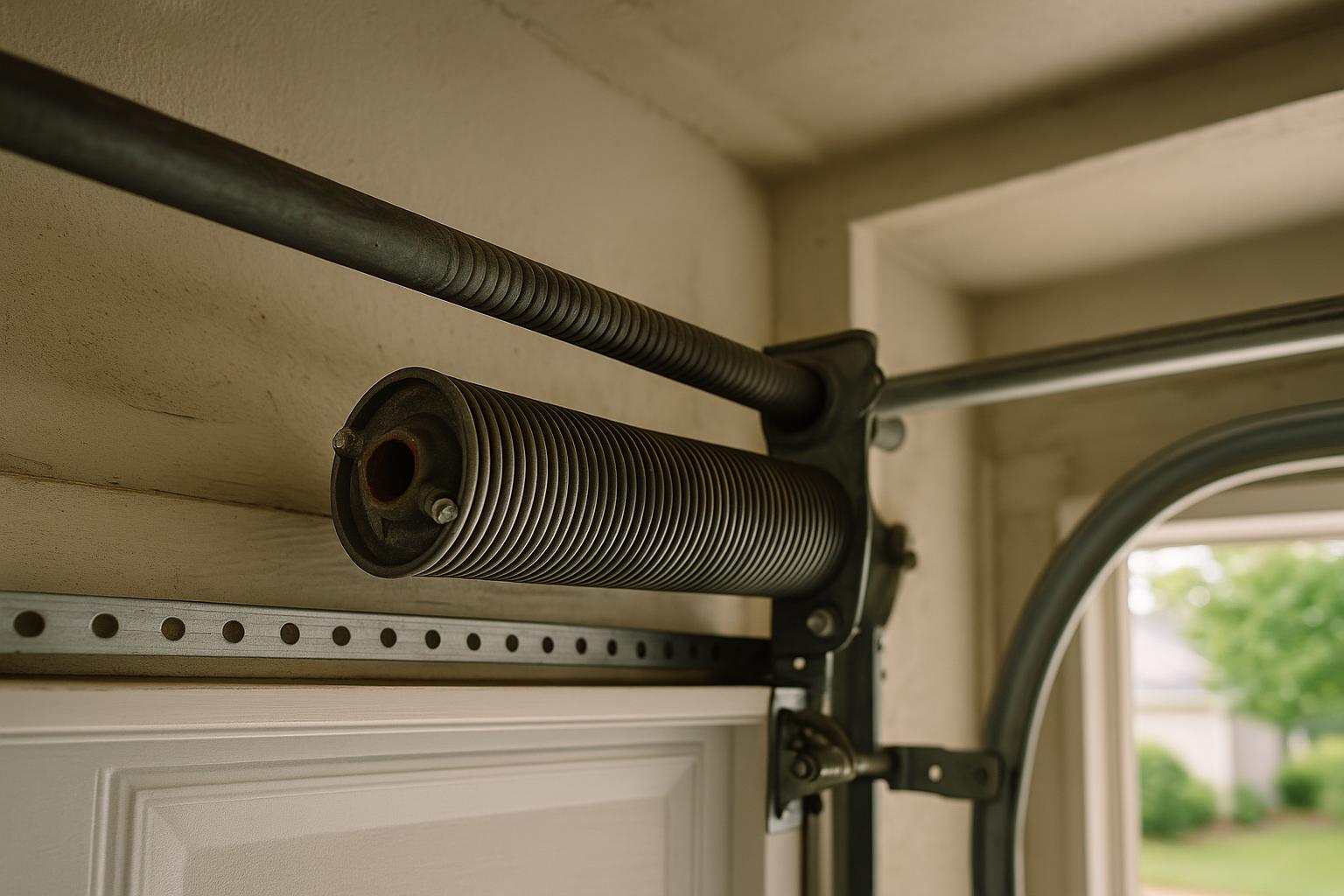
Your Garage Door Springs Are Working Harder Than You Think
Every time you open or close your garage door, the springs do the heavy lifting — literally. A standard residential garage door can weigh anywhere from 130 to 350 pounds, and those tightly wound springs are responsible for counterbalancing all of that weight. Without functioning springs, your garage door opener alone couldn't move the door at all.
For homeowners in Huntsville, where we rely on our garages daily for everything from parking to storage to workshop space, spring failure isn't just an inconvenience — it can be a safety hazard. Understanding the lifespan of your garage door springs and recognizing the warning signs of wear can save you from an unexpected breakdown and a potentially dangerous situation.
The Two Types of Garage Door Springs
Before we talk about replacement timelines, it helps to understand which type of springs your garage door uses. Most residential doors in the Huntsville area use one of two systems:
Torsion Springs
These are mounted horizontally above the garage door opening. They twist and unwind to raise and lower the door. Torsion springs are the more common type on modern garage doors and are generally considered safer and longer-lasting than extension springs.
Extension Springs
These run along the horizontal tracks on either side of the door. They stretch and contract to provide lifting force. Extension springs are typically found on older or lighter garage doors. They can be more dangerous when they break because they're under significant tension and can snap violently if not equipped with safety cables.
How Long Do Garage Door Springs Last?
Garage door springs are rated by cycles. One cycle equals one full open-and-close of the door. Here's a general breakdown:
- Standard torsion springs: Rated for approximately 10,000 cycles, which translates to roughly 7 to 10 years for the average household.
- High-cycle torsion springs: Available in 25,000 to 50,000 cycle ratings, these can last 15 to 25 years or more depending on usage.
- Extension springs: Typically rated for around 10,000 cycles, similar to standard torsion springs.
Of course, these numbers depend on how often you use your garage door. If your household opens and closes the door four or more times a day — which is common for busy families in neighborhoods across Madison and Huntsville — you'll reach that 10,000-cycle mark faster than you might expect.
Warning Signs Your Springs Are Wearing Out
Springs rarely fail without giving some advance warning. Here are the key signs to watch for:
1. The Door Feels Heavier Than Usual
Try disconnecting your opener and lifting the door manually. A properly balanced garage door should lift with minimal effort and stay open about three to four feet off the ground. If it feels extremely heavy or slams shut when you let go, your springs are losing tension.
2. The Door Opens Unevenly
If one side of the door rises faster than the other, or if the door looks crooked during operation, one of your springs may be weaker than the other. This is especially common on doors with two extension springs.
3. Loud Bang From the Garage
If you heard a loud bang — almost like a gunshot — coming from your garage, there's a good chance a spring snapped. Many homeowners in Huntsville have called us thinking someone broke into their garage, only to find a broken torsion spring hanging above the door.
4. Visible Gaps in the Spring
A torsion spring that has broken will have a visible gap in the coils, usually near the center. This is an easy visual check you can do from the ground without touching anything.
5. The Opener Struggles or Stops Working
When springs weaken, the opener has to work much harder to lift the door. You might notice the motor straining, the door stopping partway up, or the opener shutting off entirely. Continuing to run the opener with bad springs can burn out the motor, turning a spring replacement into a much more expensive repair.
6. Jerky or Shaky Movement
A door that jerks, shakes, or moves in a stuttering motion during opening or closing is often dealing with springs that have uneven tension or are nearing the end of their lifespan.
Can You Replace Garage Door Springs Yourself?
We'll be straightforward about this: garage door spring replacement is one of the most dangerous DIY home repairs you can attempt. Torsion springs are under enormous tension, and a mistake during removal or installation can cause serious injury or even death. Every year, emergency rooms across the country treat injuries from garage door spring accidents.
Extension springs are somewhat less complex to replace, but they still carry significant risk, especially if safety cables aren't properly installed. For homeowners in Huntsville, Decatur, Athens, and the surrounding areas, we strongly recommend leaving spring work to trained professionals who have the right tools and experience.
What to Expect During a Professional Spring Replacement
When you call a professional for spring replacement, here's what typically happens:
- Inspection: The technician will examine both springs, the cables, drums, and overall door balance. Even if only one spring has broken, most professionals recommend replacing both at the same time since the second spring is likely close to failing as well.
- Spring selection: The technician will match the correct spring size and type to your specific door weight and size. Using the wrong spring can cause poor balance, premature wear, or safety issues.
- Replacement: The old springs are carefully unwound and removed, and the new springs are installed and calibrated to the proper tension.
- Testing and adjustment: The door is tested multiple times to ensure smooth, balanced operation. The technician will also check the opener settings and safety features.
The entire process usually takes about an hour for a standard residential door.
How to Make Your Springs Last Longer
While you can't prevent springs from eventually wearing out, regular maintenance can extend their lifespan significantly:
- Lubricate the springs with a silicone-based garage door lubricant every six months. This reduces friction and prevents rust, which is especially important in Huntsville where our humid Alabama summers can accelerate corrosion.
- Schedule annual maintenance with a professional to check spring tension, balance, and overall door condition.
- Upgrade to high-cycle springs when it's time for replacement. The upfront cost is higher, but the extended lifespan makes them a better long-term investment for most homeowners.
- Minimize unnecessary cycles by making sure the door is fully closed before reopening, and avoid letting kids play with the opener remote.
Don't Wait for a Complete Failure
A broken garage door spring doesn't just leave you stuck — it can leave your home unsecured, your car trapped inside, and your daily routine disrupted. If you've noticed any of the warning signs we've described, or if your springs are approaching the 7 to 10 year mark, it's worth having them inspected before they fail completely.
At Huntsville Garage Door Pro, we handle spring replacements across Huntsville, Madison, Harvest, Meridianville, Decatur, and Athens. We carry a wide selection of torsion and extension springs, including high-cycle options, and we'll make sure your door is balanced and operating safely before we leave. If your garage door springs are giving you trouble, give us a call — we'll get you back on track.